
Brothers Only
Log in to listen to the interview.
Yours in the Bond of the Sphinx.
Log in to listen to the interview.
Yours in the Bond of the Sphinx. Log out
 Brent Allen · 2025
Forty years after he and a handful of brothers started their own fraternity at NIU rather than pay anyone else's price, Brent Allen sits down by the fire to talk wrestling, mountains, the cost of everything worth having — and the night the whole thing was born.
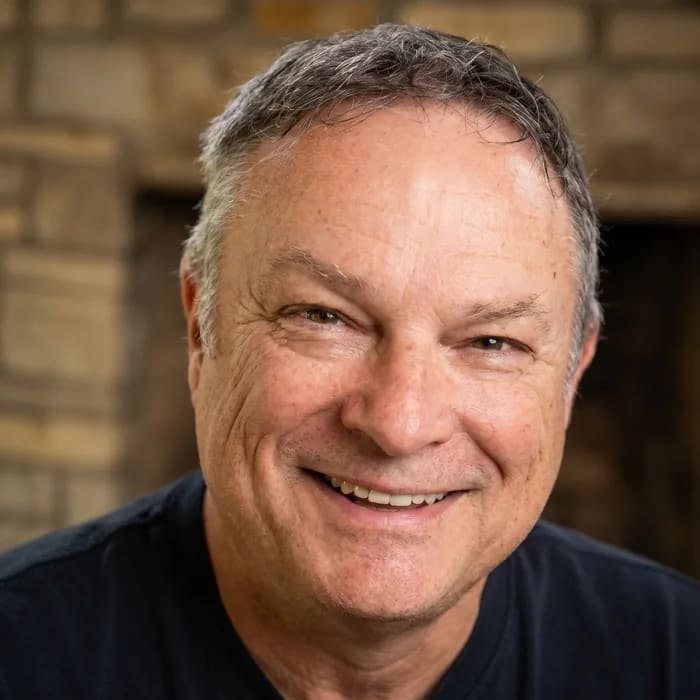
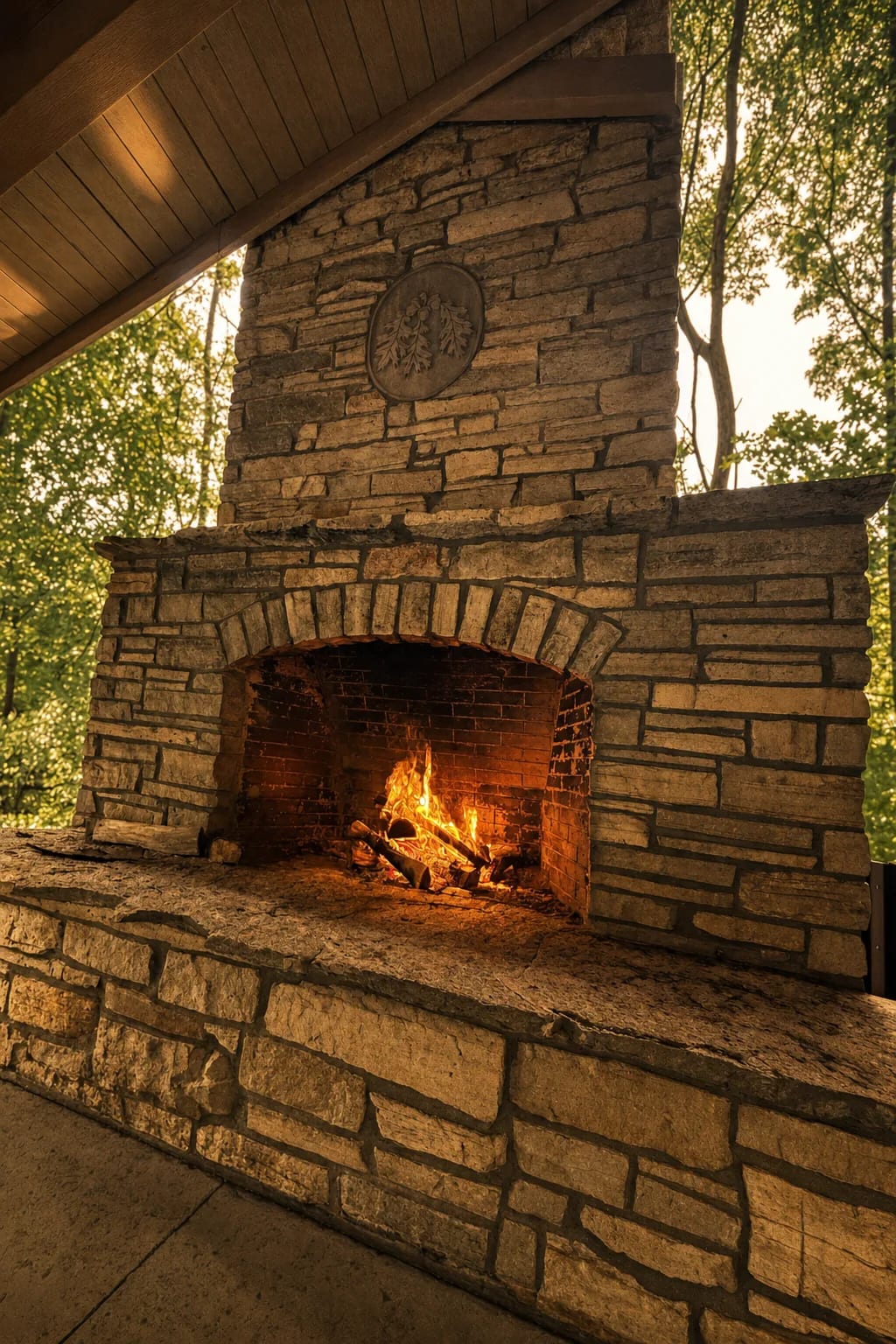
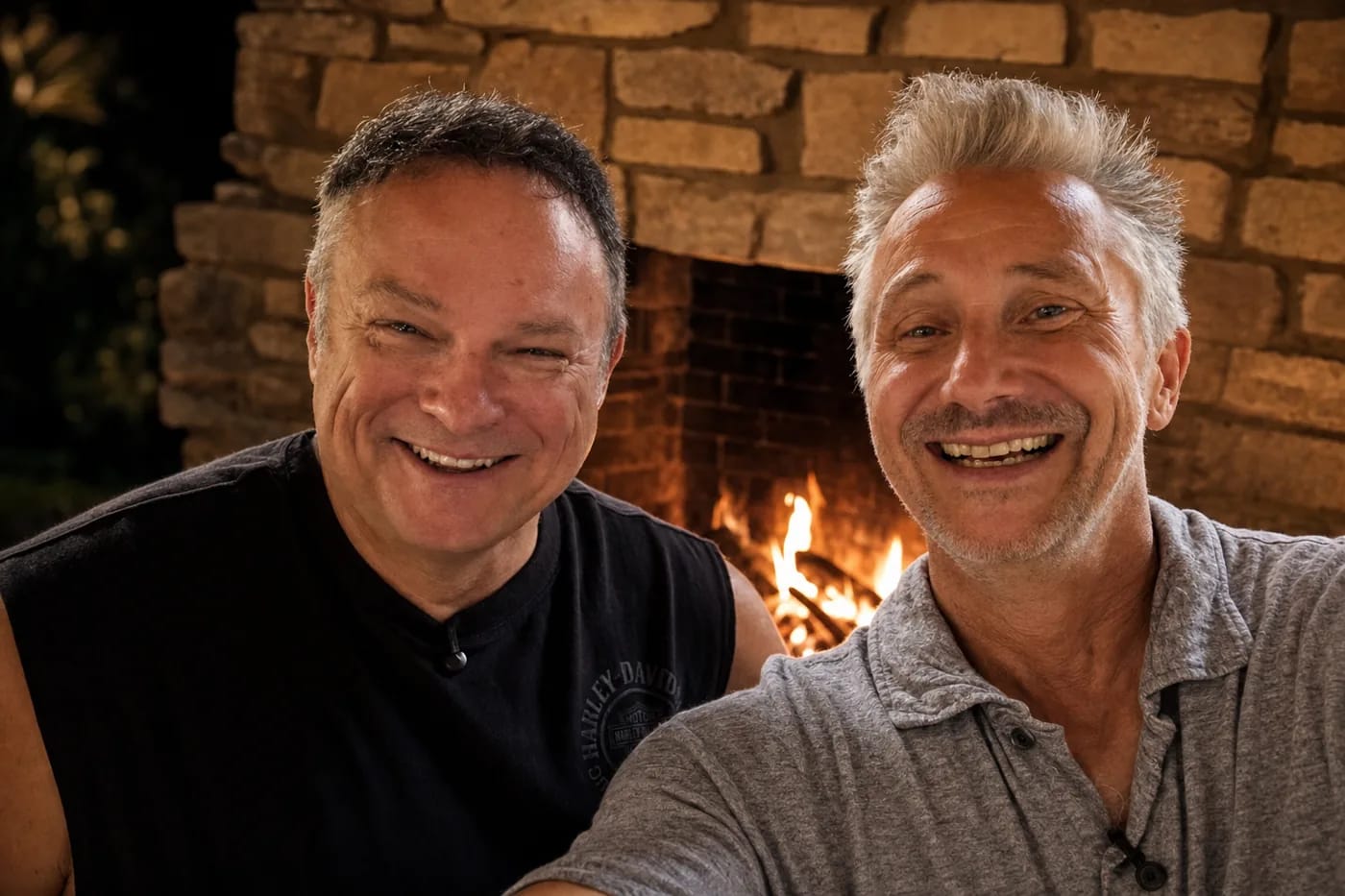
It is the night before Labor Day, 2025. A stone fireplace in an Illinois forest preserve, a good fire going, a bottle of Buffalo Trace, and two men who have known each other for forty years. One of them brought a microphone. What follows is less an interview than a fire that wouldn't go out.
Brent Allen has climbed Mount Rainier, sailed the Mac, finished a half-Ironman on nothing but martial-arts training, and spent his career in rooms most people never get within a mile of. But the thing he is best known for among the men who love him isn't on any résumé. In 1985, as a student at Northern Illinois University, Brent and a few friends decided that if the fraternities on campus weren't worth the price of admission, they'd build their own. That decision became Delta Sigs — and it shaped the next four decades of friendships for everyone it touched.
This is the first interview in our Founders' Series — recorded so that brothers scattered across forty years and a few thousand miles can sit down at the same fire again.
Summited Mount Rainier — and lives for the views you can only earn up high.
Crews the Chicago-to-Mackinac race; happiest on midnight watch under the stars.
Years of Choy Li Fut and Bagua — and learning to quiet the "monkey brain."
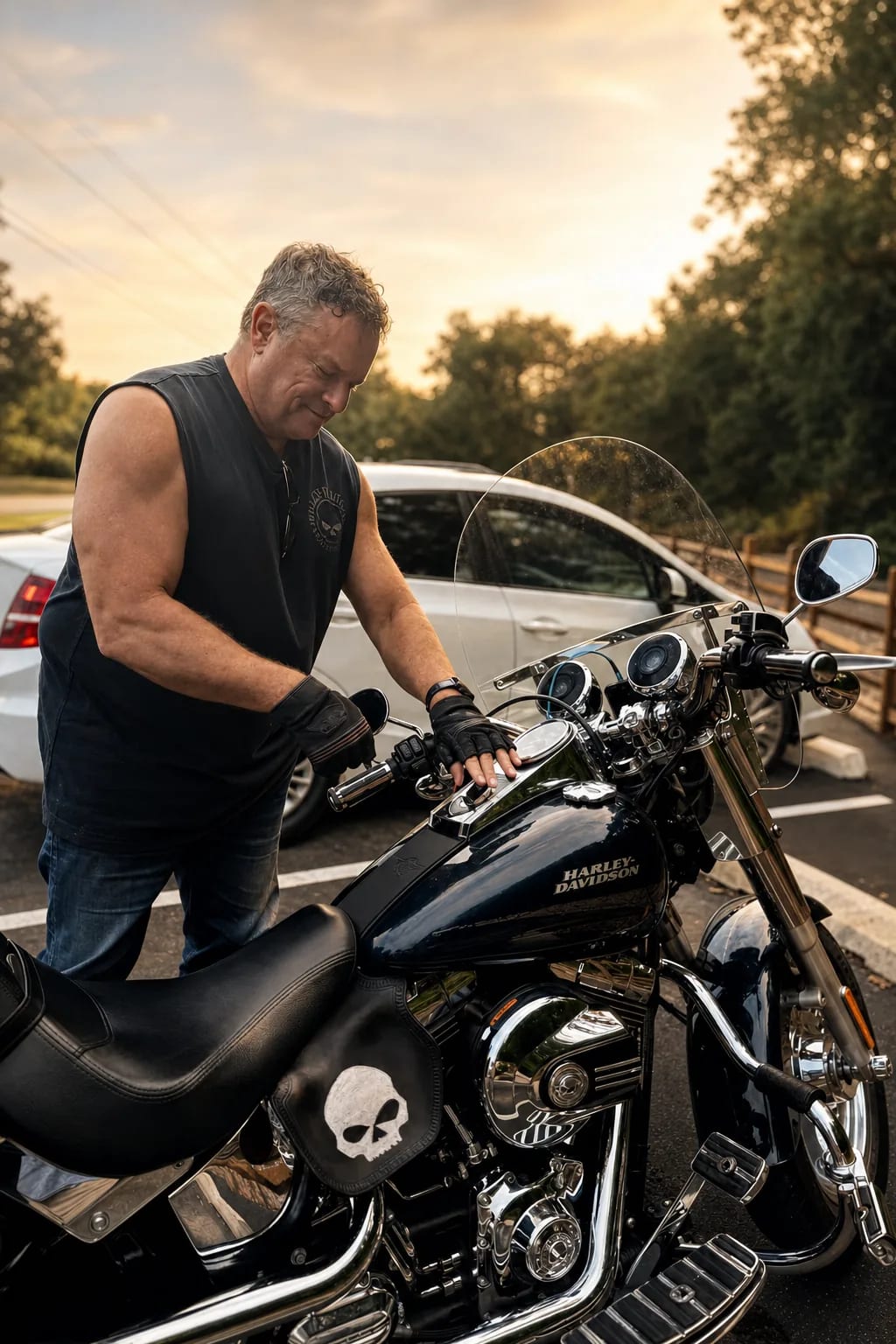
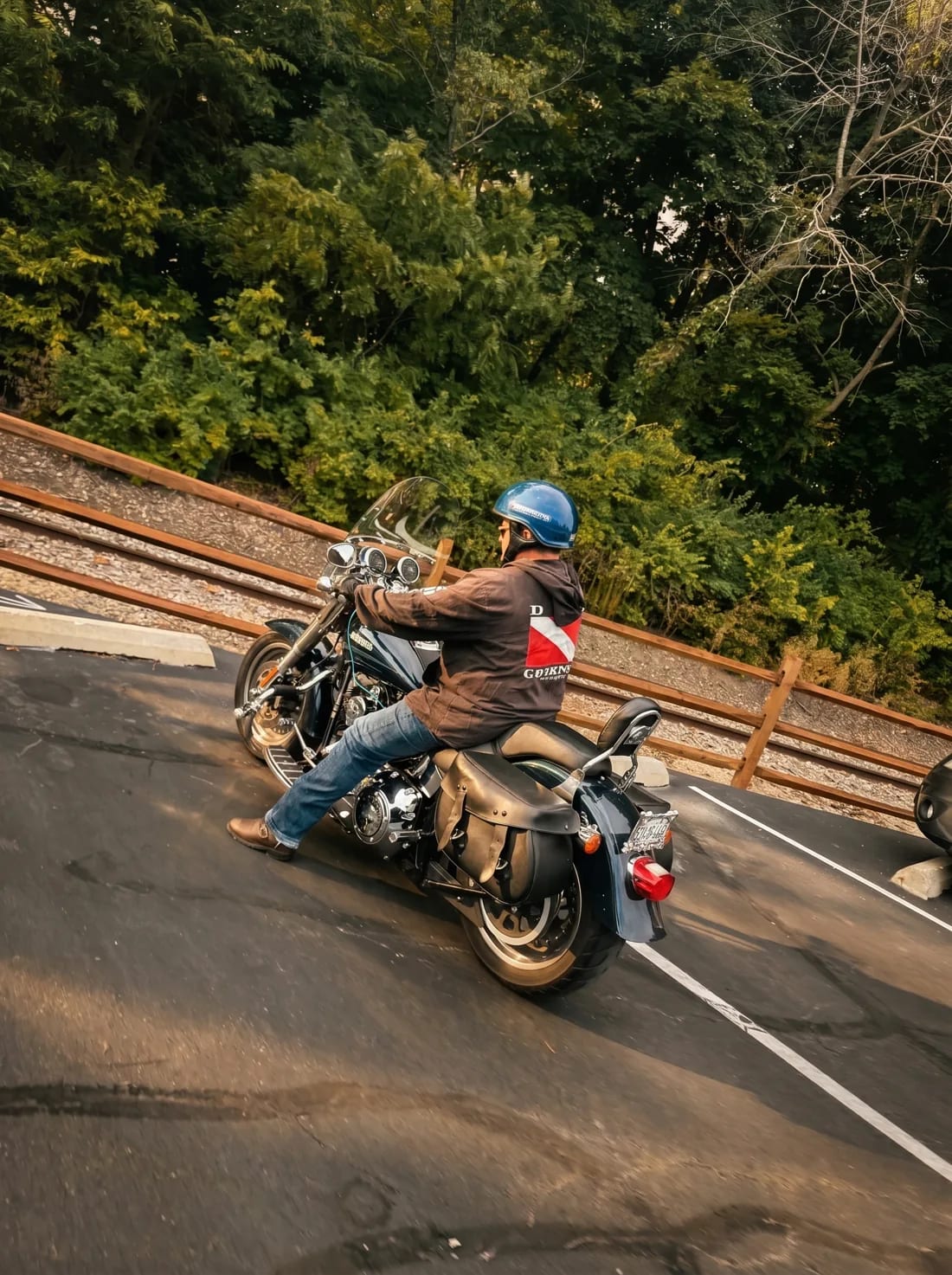
Logs miles on the Harley when the creative brain needs room to run.
Captain at Joliet West — a top-ten program modeled on Dan Gable's Iowa.
Founder and merchant banker — chasing the rooms where "lightning strikes."
Before NIU, Brent was a wrestler — captain at Joliet West, in its day one of the top ten programs in the country, modeled down to the singlets after Dan Gable's Iowa machine. They practiced seven days a week, Thanksgiving and Christmas included. There was even a team psychiatrist, a man the boys called Doc, who ran them through hypnosis, self-hypnosis and behavior modification before taking the same methods to Iowa. Over Christmas breaks, the Schultz brothers — the ones later immortalized in Foxcatcher — would turn up at the gym and collide on the mat "like two coconuts."
Then the fire went out. "The minute it stops becoming fun," Brent says, "I won't catch myself." He'd been wrestling for everyone but himself, and one day he simply walked away — good enough to wrestle in college, certain it was no longer worth what it cost. But he carried out the single lesson that would organize the rest of his life, the one his coach repeated until it stuck:
"No matter what you do, there's a price. Time, commitment, pain — there's always a price. And you have to decide whether what you want is worth it. If it's not, you shouldn't do it."
— Brent AllenThat same conviction is what he offered a family member terrified of a major surgery. Don't run from the pain, he told her — lean into it. "It's good pain. It's healing pain. And every day at rehab it'll hurt a little less, and a little less." Where, he wondered aloud, does that kind of bravery even come from? His answer surprised him: bravery is the absence of choice. When the only alternative is to let your life spiral, courage stops being heroic and starts being obvious.
He lives by a phrase he can't take credit for: choose your hard. Being out of shape is hard; working out is hard. Waking up grumpy is hard; deciding to be happy is hard. Everything worth anything is hard. You don't get to skip that — you only get to choose which hard you're willing to carry.
People call Brent fearless. He rejects the word. "Things that scare me piss me off," he says. He cannot abide the idea of not doing something because he was afraid of it — that, more than the fear itself, is intolerable. The flip side is a deliberate humility: he tries, always, to be the dumbest guy in the room. "It's not that hard," he laughs, but he means it as a strategy. The room is where you learn.
It's also how he found martial arts. "When the student is ready, the master will appear." For years he trained two hours a day — traditional Wushu, then real Bagua — under an instructor who'd been on the Jackie Chan stunt team. He learned to throw 220 pounds of weight into a strike, to do "that Chinese sneaky shit," and to quiet what he calls the monkey brain.
"The monkey brain keeps you alive — it's the one that's hungry, that's afraid. But it dominates. You have to give it something to do, so the creative brain can get free."
— Brent Allen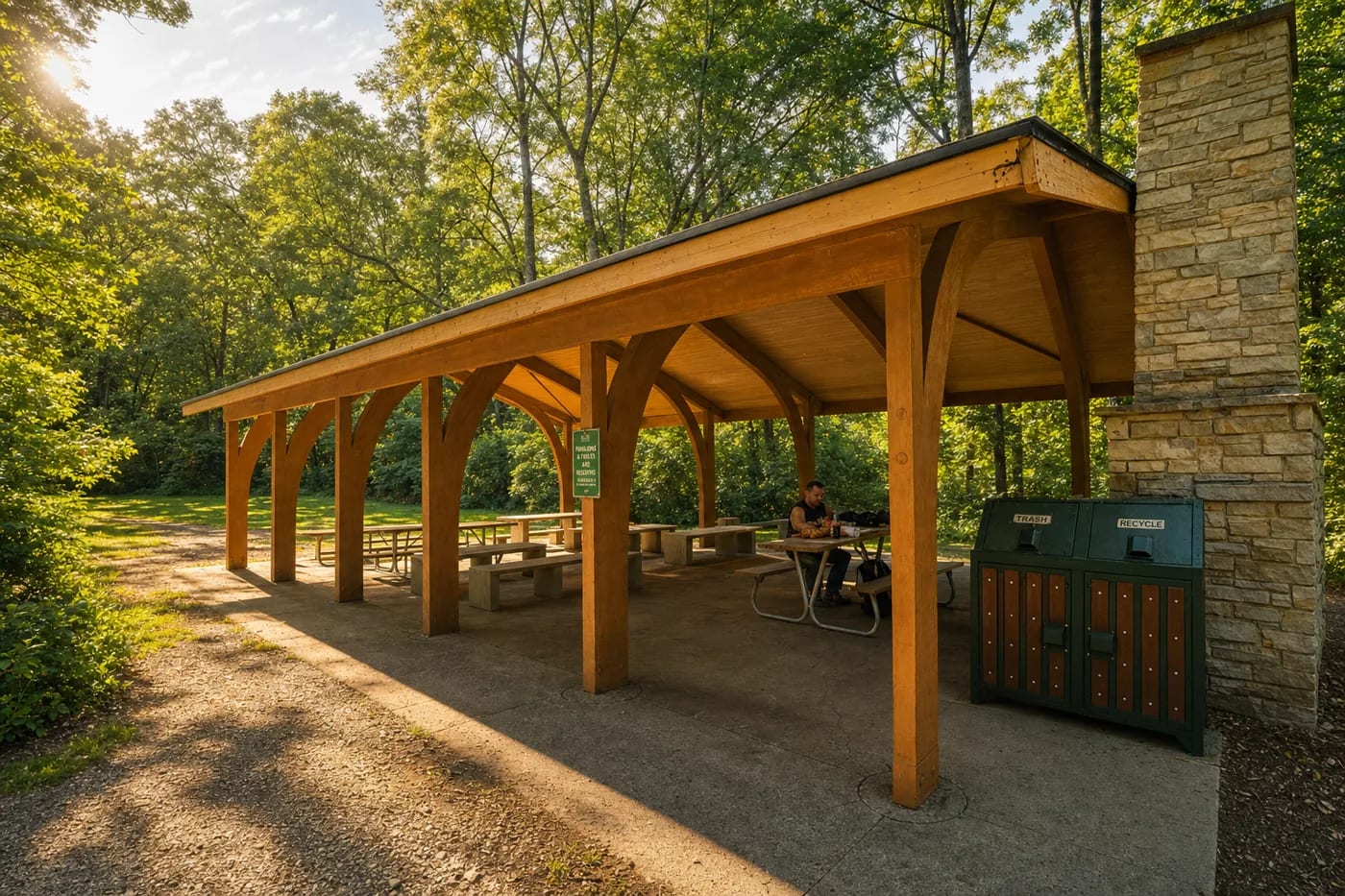
He tells his sons that most people will run a marathon to prove something to themselves and call it the edge. It isn't. "You didn't drop. Your body didn't fail you." Brent knows the difference, because at forty his body did fail him — eighty miles into the bike leg of a half-Ironman he'd entered on a month's notice and no real training, his stomach simply stopped. Organs shutting down, blood pressure spiking, he still wanted to keep going. A doctor pulled him off the course. "You had about two miles left," they told him, "before we'd have found you on the side of the road."
The lesson wasn't about limits. It was about freedom:
"My willpower is stronger than my body. I know exactly how hard I can push. And ever since, I do things because I want to — not to prove anything to anybody. You weren't standing next to me. I don't need you to be."
— Brent AllenSo why climb mountains? "Because they're there," he says, then quietly credits the real line to his brother Larry, on Rainier: "Mountain is large. Man is small. But man is here." Brent does the hard things for the moments you can only earn — the ones no screen will ever hand you. A red moon at two in the morning on the Mackinac race. Standing watch at midnight in the middle of the lake, the Milky Way overhead and hundreds of miles of black water in every direction. Ten thousand feet up on a Rainier glacier, stepping out into the cold to relieve himself and looking up at a sky most people never actually see — sliding slowly toward a crevasse and not caring, because the view was worth it.
"Mountain is large. Man is small. But man is here."
— Larry Picchiotti, on Rainier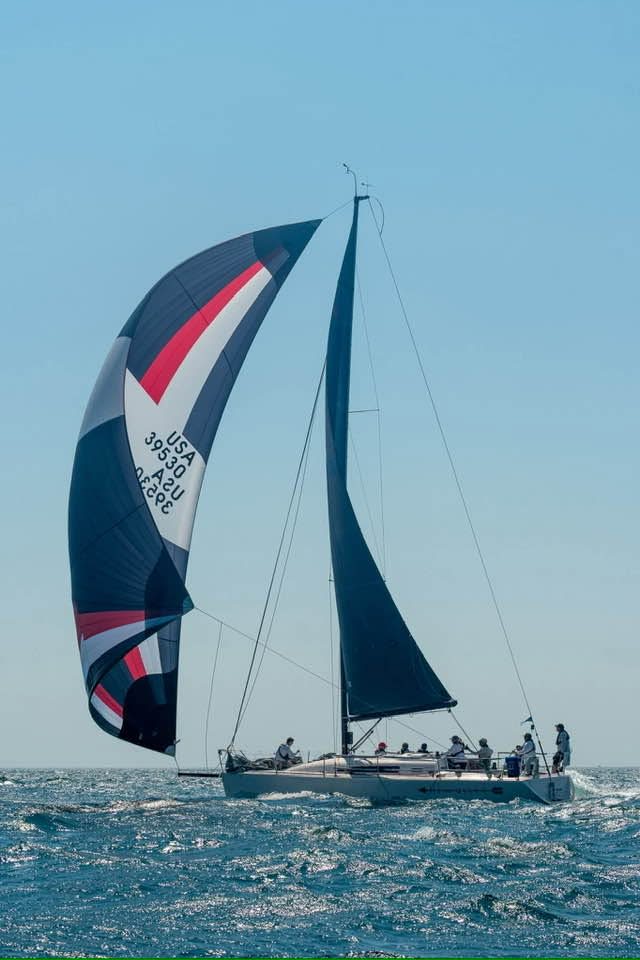
A deer that walks past your camp at four in the morning, he says, is not the same deer on television. But to be there, you had to plan the trip, pack the camp, pitch the tent, do the work. "Comes back to the price you pay." Which is exactly why, on this night, he insisted on a real fire, a real bottle, and the time to tell it right.
He keeps coming back to a story about Michael J. Fox, who fell during his battle with Parkinson's, broke his arm, and lay there — by his own account — having a perfectly justified pity party. And then climbed out of it one thankful thought at a time. The line Brent took from it, and posted for everyone he knew, became a kind of creed: gratitude determines altitude. Start the day grateful — to God, to the universe, to whatever you've got — and it rules everything that comes after.
Which brings it, finally, back to 1985. Brent wanted everything a fraternity offered — the life, the friendships, the parties. He just wasn't willing to pay the particular price they were asking. "I want all of that," he remembers thinking, "but I am not going to subordinate myself to that." So when his friend Larry floated the obvious-once-you-hear-it idea — we'll just open our own fraternity — something Brent hadn't realized he'd been turning over for months snapped into focus. "That's how we'll do it. Then it's my rules. Then we can do it our way — and better."
There was a guardrail. A mentor at the fraternity's national office — the man Brent called whenever he was stuck, who would hang up on anyone else to take his call — gave him exactly one condition for getting out of his way:
"Stay in this ethical lane — this is who we are. Stay in the lane, and I'll bleed for you."
— Brent's mentor at the fraternity's national officeThen it was a matter of finding the right people — Gary, Arnie, Matt Medke, Walt Zurin, and the rest of the characters who happened to land in the same place at the same time. Brent is adamant that he didn't do it alone, and that he wasn't really the leader people remember. "I was on top of the stagecoach. All I did was give the wild horses a direction. I said, 'There's the path — we're going that way, boys.' And everybody took off." Leadership, to him, was never about telling people what to do. It was getting everyone to agree on which mountain to climb.
He compares it to The Beatles — you can't really say it was any one of them; somebody formed the band, but the magic was the combination. "Delta Sigs was a moment in time," he says, "where lightning struck. I could've started that fraternity a year later, never met Gary, never met Matt or Walt — and it wouldn't have been the same thing. Those characters made it what it was. Had they not come together, it wouldn't have gone where it went."
Lightning struck. And forty years later, the men who were there are still chasing the feeling — which is the whole reason this fire, and this series, exist.
This is the first of many. We're tracking down brothers from across the years to capture their stories — and to bring everyone back to the same table. Got a story, a name, or a number we should have?
Reconnect with Delta Sigs